Key points
- No confetti, no hydraulic lifts, no forty-truck load-in.
- Music reporting from London.
- All people and organisations in this illustrative story are fictional.
- Estimated reading time: 3 minutes.
The spectacle is in the timing
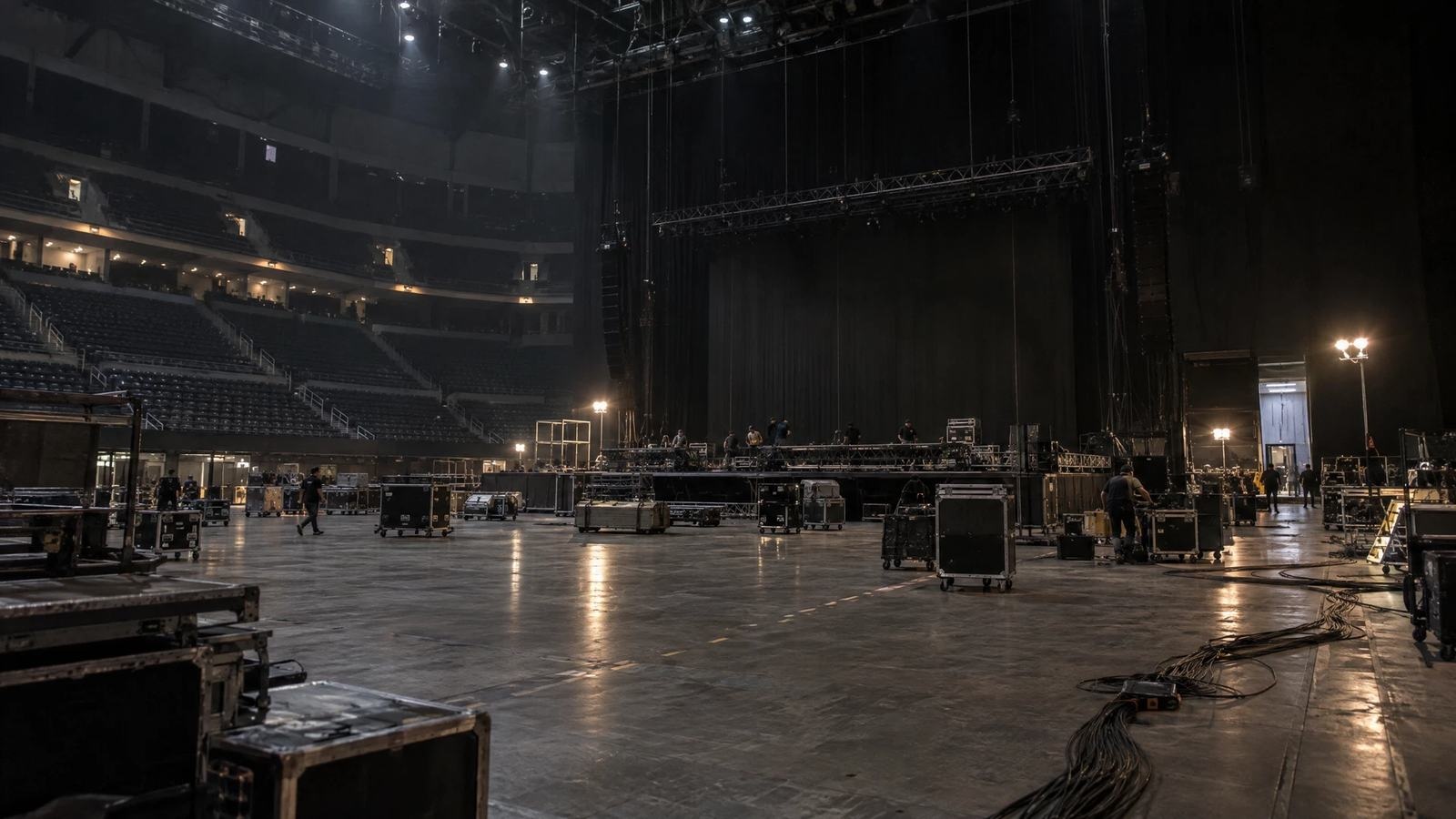
When the fictional Mercury Line tour rolls into an arena, there are no hydraulic stages waiting in a convoy outside. The visual language is a set of fabric planes, programmable practical lights and one tightly rehearsed band. It still looks large. The difference is that the scale comes from timing and framing rather than the machinery a crowd may never consciously notice.
A smaller crew changes the route
The show travels with roughly forty people, less than half the complement of comparable arena productions in the fictional market. That affects hotels, buses, catering and the fragile day between cities. The production manager described the decision as operational rather than ideological: fewer moving parts create more chances to recover when weather, traffic or a late building handover changes the plan.
“The saving is not one expensive effect. It is the ability to absorb a bad day without the whole route panicking.”
The economics are hiding in the truck count
Tour budgets are often discussed through ticket price or artist guarantee. The bigger story can be the number of trucks that need to cross a border overnight. A lean production spends less on fuel, storage, insurance and last-minute labor. It also gives a promoter more room to accept an ambitious route without needing every room to sell out immediately.
A lean arena show can still feel large when its production choices are designed for the audience rather than the load-in.
Restraint can become the new premium
Not every performer can or should strip back a show. Some audiences are buying a specific kind of maximalism. But the success of a quiet arena format is making producers ask a useful question: which elements are spectacle, and which are simply expensive habits? The answer may redefine what counts as a major tour.
The next run of releases will test how much of that change becomes convention and how much remains a useful exception. For artists, the important question is not whether the system exists, but where they decide to push against it.
Sources
- Reporting from a fictional arena load-out
- Interviews with a tour director and production manager
- Review of illustrative routing documents