Key points
- The room is no longer the room.
- Movies & TV reporting from New York.
- All people and organisations in this illustrative story are fictional.
- Estimated reading time: 3 minutes.
The screening room lost its monopoly
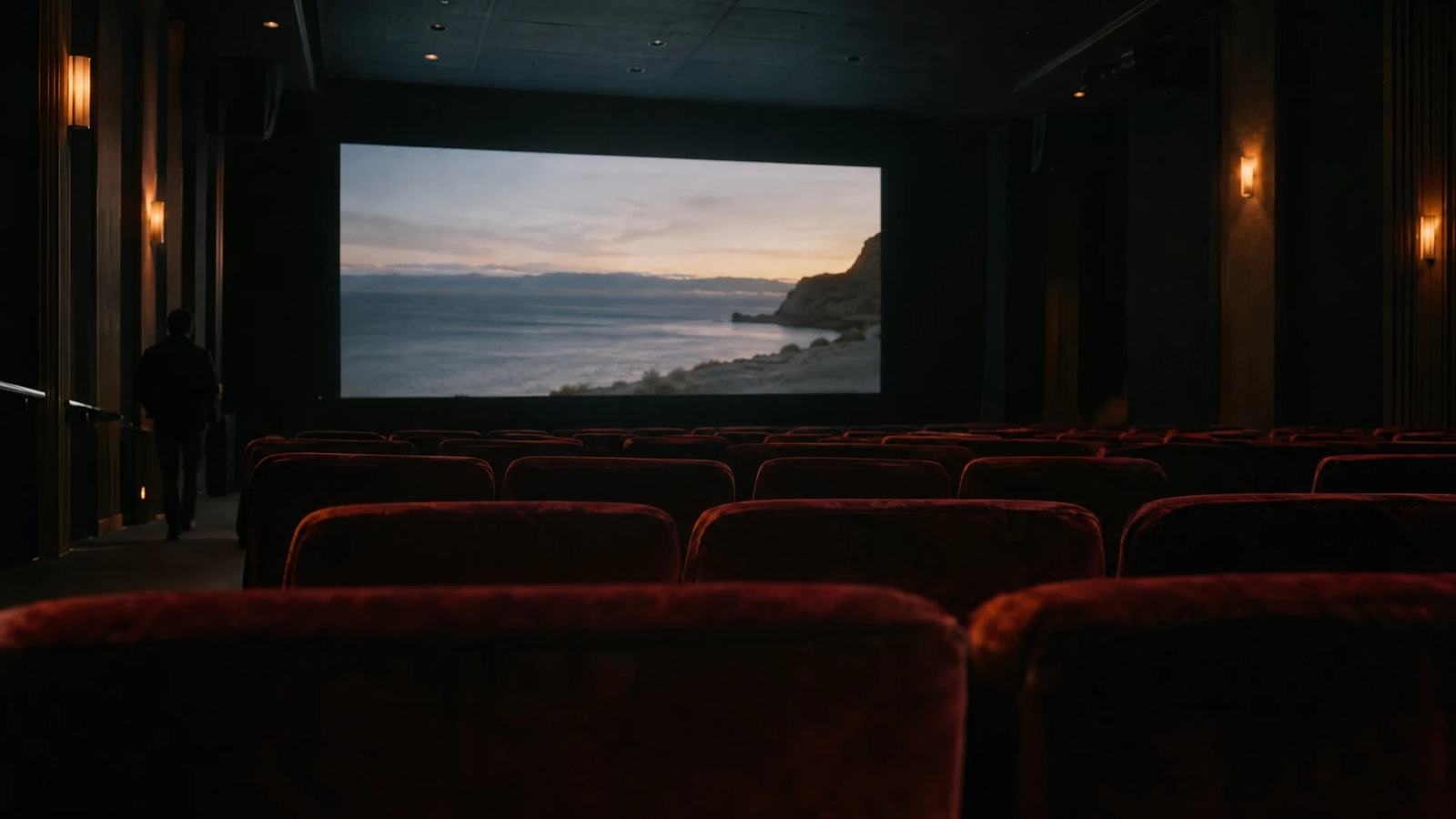
Awards voters still talk about the communal screening as if it were the natural unit of attention. In practice, more decisions now begin elsewhere: a laptop at a kitchen table, a tablet in an airport lounge, subtitles already turned on. That does not make the vote less serious. It changes the setting in which a scene succeeds or fails.
The small screen has its own grammar
Campaign advisers are increasingly alert to the details that survive a split attention environment. Dense dialogue can reward subtitles. A visually legible opening can matter more than a slow-burn first act. One fictional voter told SceneTalk that a film earned a second look because its sound mix made emotional sense through headphones. Another admitted to watching a screener at 1.4x speed until a performance made that speed feel impossible.
“A voter may be watching carefully and still be watching between two other obligations.”
Materials have become part of the viewing
The old separation between the film and the campaign material is narrowing. A concise note from a director, a well-timed cast conversation or a clear explanation of an unfamiliar setting can change whether a busy viewer returns. That does not mean voters are being instructed what to feel. It means a film’s context increasingly arrives in the same tab as the film itself.
The new awards screening is less a place than a set of conditions — headphones, subtitles, a browser tab and limited time.
Prestige has to survive proximity
The category’s most expensive productions still benefit from scale and craft. But their advantages are no longer guaranteed by the room. Work that feels intimate, immediately legible or structurally clean can gain ground when watched in fragments. The question for a campaign is no longer simply whether a voter saw the film. It is what else was happening when they did.
The next release cycle will show whether the adjustment has become a practice rather than a talking point. For now, the people making the calls are designing around a more complicated, and more realistic, idea of attention.
Sources
- Interviews with eight anonymous fictional awards voters
- Reporting from campaign consultants
- Illustrative viewing-pattern diaries supplied by voters